STREAMER HIT BY CAR MID-CROSS-COUNTRY WALK IS IRL'S WAKE-UP CALL
The IRL streaming meta has officially jumped the shark — and by "jumped," I mean it got T-boned by a sedan on an Indiana highway.
Streamer "hmblzayy" — currently attempting to walk from Philadelphia to California while broadcasting the entire death march live — was struck by a car in Indiana and rushed to the hospital this week. The clip, which exploded on r/LivestreamFail with over 25,000 upvotes, shows the moment of impact and its immediate chaotic aftermath. It's the kind of content that makes you question whether the entire "IRL endurance challenge" genre is a ticking time bomb that's finally gone off.
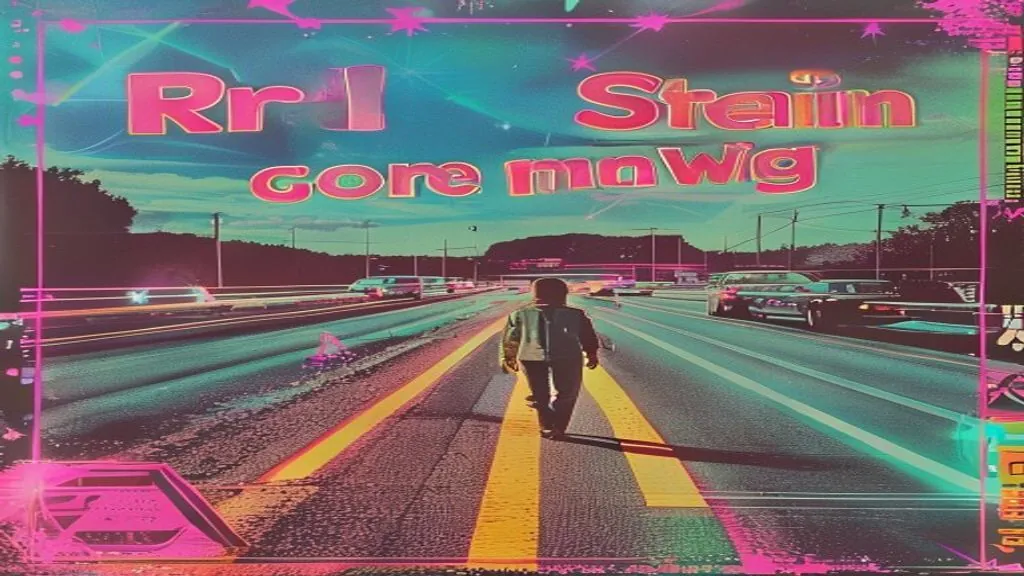
Let's be clear about what's happening here: we've created an entertainment economy where walking across an entire continent while livestreaming is considered viable content strategy. Not walking on a treadmill in a studio. Not walking through controlled environments. Walking on actual public roads, alongside actual two-ton metal death machines, for hours and hours, day after day, because algorithms reward consistency and viewers reward suffering.
hmblzayy isn't the first to attempt this specific flavor of content roulette. The "walking across [country]" format has become its own subgenre on Twitch and Kick, following in the footsteps of creators like Theo "Theovert" who walked across America in 2022, or the various European and Asian creators who've done similar endurance treks on platforms from YouTube to Douyin. Each iteration pushes the envelope further — longer distances, worse weather, more dangerous routes, more hours streamed — because that's what the attention economy demands. Last month's "impressive" is this month's "boring."
The Indiana incident isn't even the only near-death streaming moment trending this week. IShowSpeed (Darren Watkins Jr.), one of the biggest streamers on the planet with over 30 million YouTube subscribers, had his own "near-death experience while streaming in Barbados" that racked up nearly 10,000 upvotes on the same subreddit. When the two most-discussed streaming stories of the week both involve creators almost dying on camera, maybe — just maybe — we have a systemic problem.
Here's the uncomfortable truth that nobody in the creator economy wants to acknowledge: the incentive structures of live streaming actively encourage this behavior. Platforms like Twitch and Kick don't just tolerate dangerous IRL content — they algorithmically amplify it. A streamer sitting safely in their room talking to chat gets a fraction of the discoverability of someone doing something "insane" in the real world. The clipping ecosystem (where short-form moments from live streams get shared across TikTok, Twitter/X, Instagram Reels, and YouTube Shorts) creates massive viral potential for dangerous moments. And the donation model — where viewers pay real-time money to interact with streamers — means that peak danger often coincides with peak revenue.
It's a perverse feedback loop: viewers donate more during exciting/dangerous moments → streamer realizes danger = money → streamer takes more risks → viewers reward those risks → cycle repeats until someone gets hurt. Except now, someone has gotten hurt, and the cycle shows no signs of stopping.
The creator-as-business mechanics here are particularly grim. hmblzayy's cross-country walk isn't just a passion project — it's a calculated content play. The potential payoff? Substantial. A successful cross-country walking stream can generate hundreds of thousands in donations, subscription revenue, and post-stream YouTube compilation views. It can attract sponsorships from energy drink brands, apparel companies, and travel apps. It can transform a mid-tier streamer into a household name overnight. But the risk calculus has always been skewed because the person calculating the risk is also the person who profits from underestimating it.
And the parasocial dynamics make it worse. Viewers develop genuine emotional attachments to these creators. They feel invested in the journey. They donate money with messages like "stay safe!" and "you got this!" — inadvertently creating a financial incentive for the streamer to keep going even when common sense says stop. When hmblzayy returns from the hospital (as reports suggest the injuries, thankfully, weren't life-threatening), the pressure to continue the walk will be enormous. Chat will expect it. The narrative demands completion. Anything less would be "giving up."
This is where platform-vs-creator responsibility gets murky. Should Twitch or Kick intervene to stop dangerous IRL streams? They already have terms of service prohibiting content that "endangers" the creator, but enforcement is laughably inconsistent. Popular streamers get leeway that unknowns don't. When xQc or Kai Cenat do something reckless, it's "entertainment." When a smaller streamer tries the same thing, it's "against community guidelines." The double standard isn't just hypocritical — it's dangerous, because it teaches emerging creators that risk-taking is the price of admission to the big leagues.
The international context is worth noting too. This isn't just a Western phenomenon. On Douyin and Kuaishou, Chinese creators regularly attempt extreme endurance challenges — though they face much stricter platform regulation and government oversight. The « lipstick king » Li Jiaqi (李佳琦) and other top livestreamers operate in an environment where authorities will absolutely shut down dangerous broadcasts. American platforms could learn something from this approach, though they won't, because "censorship" complaints would dominate the discourse.
What's the solution? Honestly, I don't think there is one that the free market will implement voluntarily. Platforms will continue to profit from dangerous content until a creator dies on stream — and even then, history suggests they'll issue a statement, temporarily tighten guidelines, and quietly relax enforcement once the outrage fades. The creator economy's addiction to engagement metrics is stronger than any moral consideration.
In the meantime, streamers like hmblzayy will keep pushing the boundary. They'll keep walking along highways, climbing buildings, swimming in dangerous waters, and streaming from increasingly perilous locations — because that's what works. And viewers will keep watching, keep donating, keep clipping, and keep sharing — because that's what we do. The machine feeds itself, and the next "near-death" clip is always just one algorithm refresh away.
Get well soon, hmblzayy. And maybe consider taking a plane next time.