Inside Junya's Billion-View TikTok Weirdness Machine
There's a YouTube video making the rounds right now titled "Junya1gou funny video 😂😂😂 | JUNYA Best TikTok April 2023 Part 297." Part 297. Two-hundred-and-ninety-seven. If that number doesn't tell you everything about the content-industrial complex built around one man's willingness to do deeply strange things on camera, nothing will.
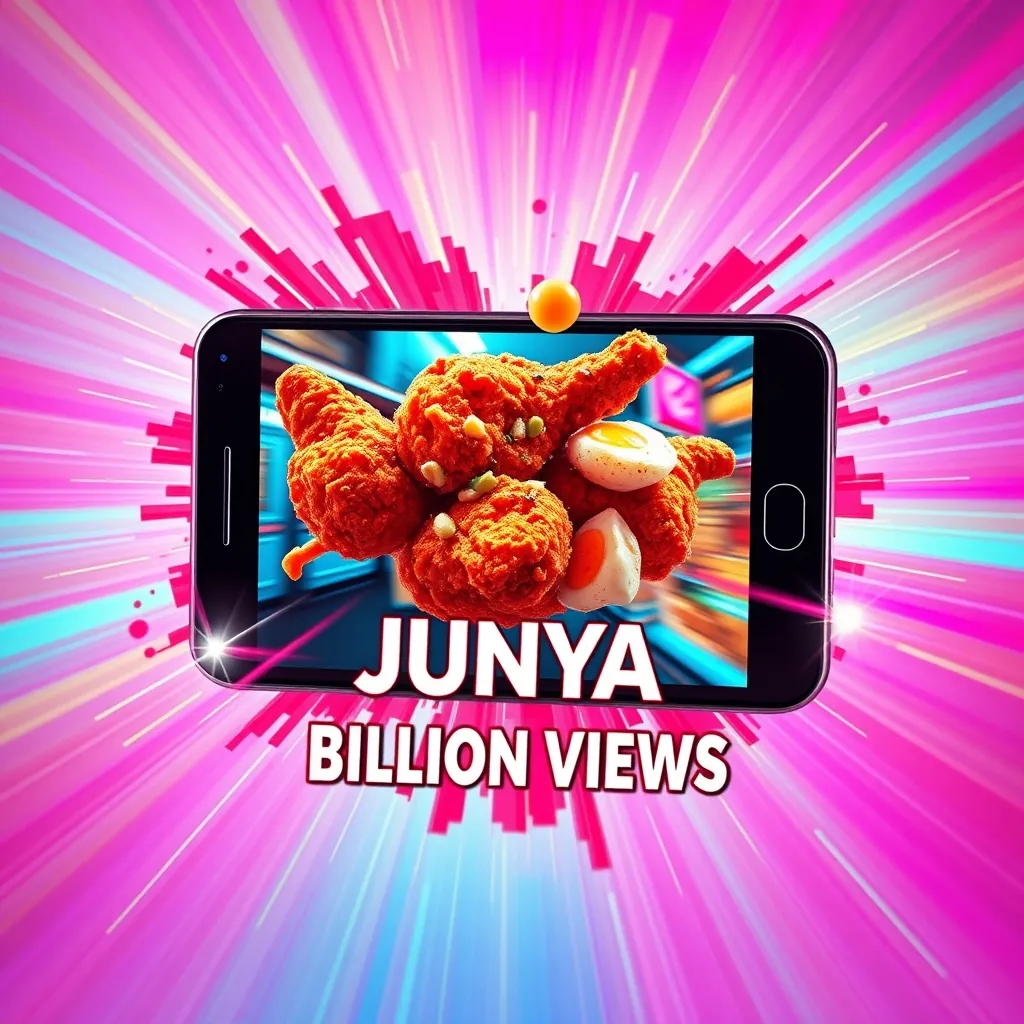
Meet Junya (じゅんや)—Japan's most bafflingly viral export since the concept of kawaii itself. With over 40 million followers on TikTok, this twenty-something from Japan has cracked a code that eludes 99% of creators: pure, language-free, universally bewildering physical comedy that transcends every border, algorithm, and basic sanity check.
His videos are simple. Deceptively so. Junya takes food—usually fried chicken, eggs, noodles, or some cursed combination thereof—and does things that would make Gordon Ramsay file a police report. He stuffs things inside other things. He deep-fries the unfryable. He commits culinary crimes that somehow loop back around to being art. No dialogue. No explanation. Just a man, his kitchen, and an apparent vendetta against his own digestive system.
The comments are a United Nations of confusion. "Why is this in my feed" in English. "这是什么" (What is this) in Chinese. "Что это" in Russian. "Que é isso" in Portuguese. The algorithm doesn't care what language you're crying in—it just knows you're engaging.
Here's where it gets interesting from a creator-economy perspective. Junya himself isn't the only one cashing in. That "Part 297" compilation channel? It's one of dozens—probably hundreds—of accounts freebooting his content, chopping it into 10-minute YouTube compilations, and monetizing the chaos. These channels operate in a gray area: they're technically stealing content, but TikTok's embed-friendly nature and YouTube's relatively lax enforcement on "transformative" compilation content means they print money with approximately zero production cost.

Do the math. If each of those 297 parts has even 500,000 views—a conservative estimate for channels that have been grinding this long—that's nearly 150 million views of someone else's creativity being monetized by randos with a CapCut subscription. At YouTube's average CPM of $2-5 per 1,000 views for compilation content, we're talking $300,000-$750,000 in ad revenue generated from Junya's weirdness. Money that almost certainly isn't reaching the guy actually deep-frying the mayonnaise.
This isn't unique to Junya. Khaby Lame—the Senegalese-Italian king of silent exasperation—deals with the same parasite economy. Li Ziqi (李子柒) battled it for years before her infamous contract dispute exploded. Chinese mega-creators like Xiao Yang Ge (疯狂小杨哥) and Dong Yuhui (董宇辉) face domestic freebooting armies on Douyin and Kuaishou. The pattern is always identical: one creator breaks through with a format that works, and a thousand leeches descend to siphon the runoff.
But Junya's case is special because his content is SO language-free, SO culturally ambiguous, that it's essentially uncopyrightable in practice. You can't watermark absurdity. You can't DMCA a vibe.
Let's talk about why his stuff actually works—and why it's harder to replicate than it looks. The closest Western analog is probably early Vine-era physical comedy: King Bach, Lele Pons, Logan Paul's pre-boxing mug-for-the-camera phase. But those creators leaned heavily on dialogue, punchlines, recognizable setups. Junya strips all that away. His comedy is pre-verbal. It taps into something primal—the same brain circuit that fires when someone trips on a sidewalk. Not because it's clever. Because surprise plus physicality equals funny. It's caveman humor refined for the vertical-video age.
The production value is deliberately low. Phone camera. Basic editing. No fancy transitions. This is intentional. High production would break the spell—would make it feel like "content" instead of "some guy being unhinged in his kitchen at 2 AM." The scrappiness IS the authenticity, and the authenticity IS the engagement.
Compare this to the Western creator economy's obsession with scaling up. MrBeast spends millions per video. IShowSpeed turned chaos into a global live-streaming empire. Charli D'Amelio parlayed dancing into a Hulu show and Dunkin' partnership. Meanwhile, Junya is out here filming himself putting cheese inside chicken inside more cheese, and he's got roughly half the TikTok followers MrBeast has—on a platform MrBeast doesn't even primarily use.
That's the power of short-form video in 2023. You don't need a warehouse. You don't need a production team. You don't even need a shared language with your audience. You just need a willingness to commit to the bit—every single day, multiple times a day, until the algorithm decides you're a star.
The brands have noticed. Junya's done partnerships with everything from Japanese snack companies to mobile games chasing global reach. His audience skews young, international, and absolutely massive—the holy trinity for marketers who don't need demographic specificity, just raw eyeballs by the cargo-ship load.
Here's my take: Junya represents something the creator-economy industrial complex doesn't want to admit. All that advice about "find your niche," "build a personal brand," "engage authentically with your community"—Junya does none of it. He doesn't speak to his audience. He doesn't share his backstory. He doesn't do vulnerability drops or Q&A sessions or whatever the LinkedIn creator-coach crowd is peddling this quarter. He just... does stuff. Weird stuff. Consistently, relentlessly, with a level of commitment that borders on clinical.
And it works. Better than 99% of the "strategy" being sold by people who've never gone viral in their lives.
So yeah, go watch Part 297. Watch Part 1 while you're at it. Wonder how a guy turned food crimes into a global media empire. Then ask yourself: in a world obsessed with optimization, maybe the real strategy was being inexplicable all along?
Junya gets it. The rest of us are still trying way too hard.