Khaby Lame in 007 First Light: TikTok's Silent King Meets Bond
The gaming and creator worlds just collided in the most unhinged way possible. Khaby Lame—the Senegalese-Italian TikTok megastar with a brain-melting 162.4 million followers—is reportedly set to appear in the upcoming James Bond game 007 First Light. Because nothing says "Her Majesty's Secret Service" like a 24-year-old from Chivasso whose entire brand is silently mocking life hacks.
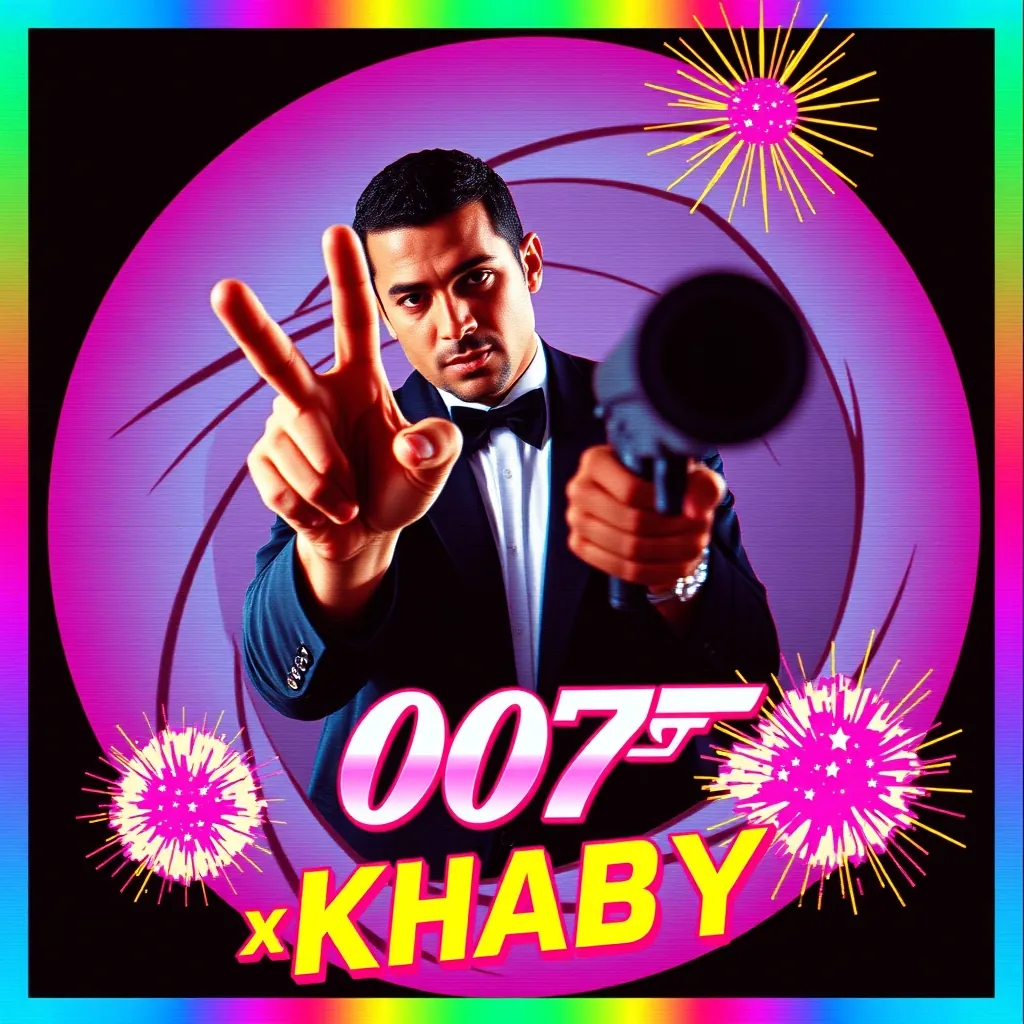
Let that marinate for a second. The most followed human on TikTok—beating out Charli D'Amelio's reign, surviving the MrBeast sub war, outlasting every algorithm tantrum Zhang Yiming's empire could throw—is now canon in the Bond universe. Ian Fleming is somewhere spinning like a centrifuge.
Here's what we know: details remain sketchier than an Adin Ross boxing contract, but the IGN report confirms Lame's involvement in some capacity. This isn't just a lazy skin or Easter egg—this is a full-blown crossover between old-guard IP and new-guard creator royalty. The gaming industry, which spent years pretending YouTubers and TikTokers were peripheral noise, is now building entire narrative experiences around them.
And Khaby isn't just any creator. He's the accidental philosopher-king of the short-form video era. His shtick—reacting to absurdly complicated "life hacks" with a simple, silent demonstration of the obvious solution—has become a universal language of exasperation. No words needed. The hand gesture says everything. In a fragmented media landscape where Dong Yuhui (董宇辉) waxes poetic about literature on Douyin while moving millions of dollars in product, and Xiao Yang Ge (疯狂小杨哥) turns chaotic family comedy into a livestream empire, Khaby achieved something arguably more impressive: global meme fluency without uttering a syllable.
The Bond move makes cynical business sense when you crunch the numbers. The 007 franchise has been searching for relevance since Daniel Craig's swan song in No Time to Die (2021). Meanwhile, Khaby's engagement rates make traditional Hollywood marketing look like a Kuaishou fake Trump stream—entertaining but not exactly moving units. When your star has more followers than the combined populations of Germany and France, you don't ask why you put him in your game. You ask how fast.
But here's where it gets interesting from a creator-economy perspective: this represents the next evolution of the influencer-to-IP pipeline. We've seen creators play games for content—xQc's GTA RP marathons on Kick, IShowSpeed's chaotic FIFA rages on YouTube, Kai Cenat's marathon streams that break Twitch records. We've seen creators launch games—MrBeast's Beast Games, Logan Paul's financial ventures that shall not be named. But creators appearing in established AAA game franchises as themselves? That's newer territory.
Think about the trajectory: Ninja got a Fortnite skin. PewDiePie got cameo roles in indie games. But those were always "gaming creators in gaming products." Khaby Lame is a short-form comedy creator crossing into a cinematic spy thriller franchise. The Venn diagram of "people who watch TikTok life hack reactions" and "people who play James Bond games" historically looked like two circles on opposite sides of a whiteboard. Some executive just smooshed them together with the confidence of a man who's never been ratioed.
The international angle matters too. Khaby isn't just big in the West—he's massive across Africa, Europe, the Middle East, and Latin America. He's the kind of cross-cultural phenomenon that brand strategists dream about during late-night PowerPoint sessions. In a world where Riyaz Aly and Avneet Kaur dominate Indian TikTok, where Bayashi turns ASMR cooking into art on the Japanese platform, and where BTS's Jungkook can crash servers with a single Weverse post, Khaby represents something rare: a truly borderless creator. Putting him in Bond isn't just a cameo—it's a localization strategy wrapped in a flex.
Of course, the purists are already whining. "Bond is about suave sophistication," they'll cry, completely forgetting that Die Another Day featured an invisible car and Pierce Brosnan surfing a CGI tidal wave. The franchise has survived worse than a TikTok star—Roger Moore fought a guy in a gorilla suit. Khaby showing up to silently judge henchmen's inefficient murder methods would honestly be more grounded than half of Moore's filmography.
The real question is what this signals for the creator economy's future. When traditional entertainment IP starts treating social media stars as essential casting rather than stunt promotion, the power dynamic shifts permanently. We're not far from a world where a game's launch strategy includes "secure the Kai Cenat cameo" alongside "optimize engine performance." The creators aren't just promoting the culture anymore—they're being woven into its fabric.
For Khaby specifically, this Bond appearance is the latest milestone in a career that's defied every expectation. From losing his factory job during COVID to becoming the most followed person on TikTok—ahead of institutional accounts, ahead of brands, ahead of entire media companies—he's the ultimate proof that the algorithm giveth and the algorithm... well, it mostly taketh away from everyone else. His brand deals reportedly run into the seven figures. His face is recognizable from Milan to Mumbai. And now he's got a foot in a franchise that's grossed nearly $8 billion at the global box office.
Not bad for a guy whose entire act is communicating through exasperated silence.
The game industry's creator obsession isn't slowing down. From IShowSpeed appearing in football promotions to MrBeast building his own competitive reality empire, the walls between "content creator" and "entertainment property" are crumbling faster than a Kuaishou livestreamer's patience during a fake Biden bit. Khaby in Bond is just the latest—and loudest—signal that the future of entertainment is creator-first, platform-agnostic, and completely unrecognizable to anyone who thought YouTube was just for cat videos in 2009.
So here's to 007 First Light. May Khaby's cameo be brief, silent, and devastatingly efficient—just like his TikToks. And may the gaming industry continue its chaotic embrace of the creator economy, because honestly? It's the most entertaining thing happening in either space right now.