xQc's $100K UFC Bet Is Peak Streamer Excess
The man who signed a $100 million deal to play video games on camera just casually dropped six figures on a UFC bet mid-stream. Because what else are you going to do when you're Félix "xQc" Lengyel — the most gloriously unhinged personality on the entire internet?
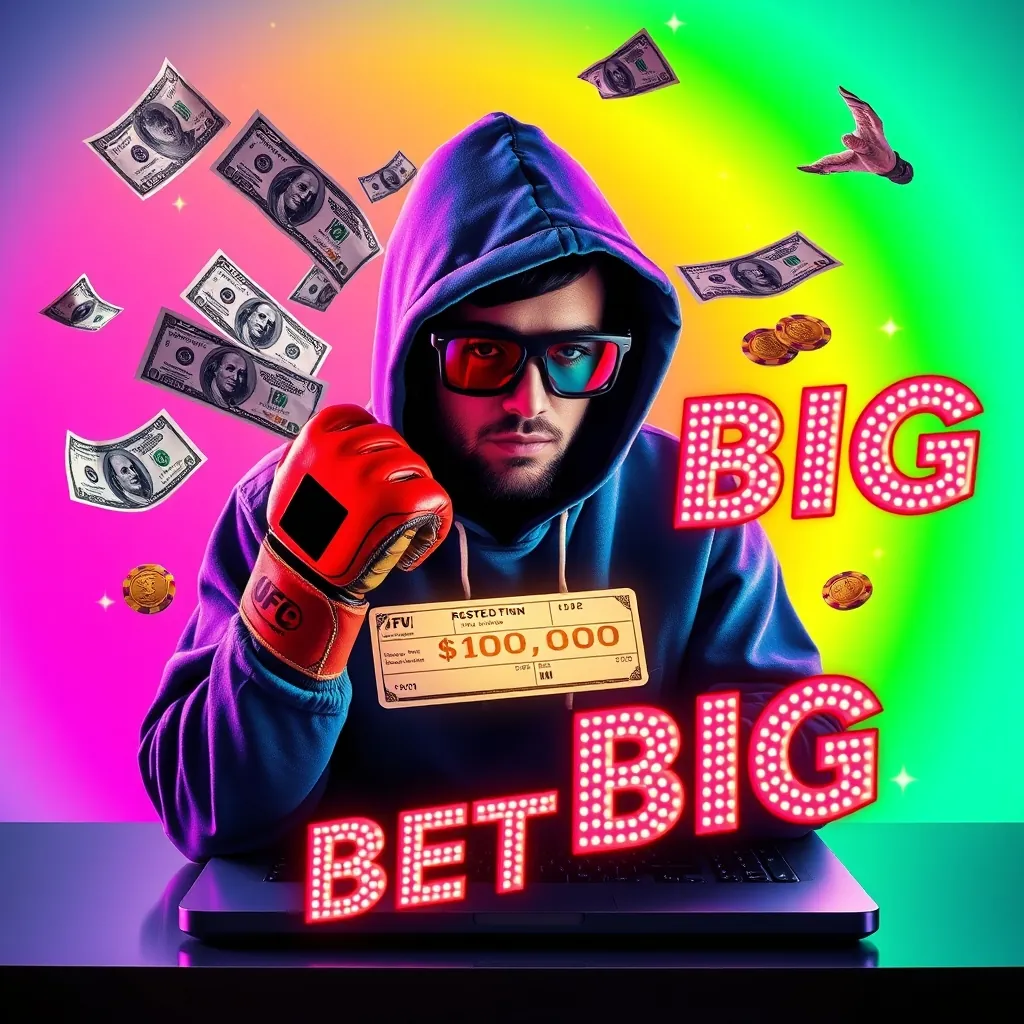
Here's the situation: xQc, streaming on Kick (the Stake.com-backed platform that essentially bought him a small country's GDP), reportedly slapped down $100,000 on UFC action — backing Aiemann Zahabi on a card headlined by the neon-haired bantamweight sensation Sean "Suga" O'Malley. For the math-impaired: that's more money than the median American household earns in a full year. For xQc, it was a Tuesday afternoon.
Let's rewind for anyone who's been living under a rock without Wi-Fi. xQc — born Félix Lengyel in Laval, Quebec — is not just a streamer. He's THE streamer, a human content engine who has, at various points, held the title of most-watched broadcaster on Twitch across multiple consecutive years. We're talking billions — yes, with a B — of minutes watched. His react-and-rage formula, equal parts ADHD chaos and genuine charisma, turned him into the platform's undisputed biggest draw.
Then in 2023, Kick — the nascent streaming platform backed by cryptocurrency gambling empire Stake.com — handed xQc a non-exclusive contract reportedly worth $100 million over two years. That's LeBron money. That's "I can buy a private island and still afford the property taxes" money. It instantly became one of the largest creator deals in internet history, dwarfing even MrBeast's enterprise valuations in pure guaranteed cash.
So when xQc drops $100K on a UFC fight, here's the thing everyone needs to understand: this is not reckless gambling. This is content. This is business.
The economics are almost elegant in their depravity. xQc streams on Kick. Kick is funded by the same people who own Stake.com. Stake.com sponsors xQc. So the money flows in a beautiful, ouroboros-like circle — Stake pays Kick, Kick pays xQc, xQc gambles on Stake, viewers watch the gambling, viewers sign up for Stake, Stake makes money, Stake pays Kick. It's the most efficient content-to-cash pipeline since Jake Paul figured out you could just punch people on YouTube and call it boxing.
And the viewers? They eat it up. xQc's streams regularly pull 50,000 to 80,000 concurrent viewers on Kick, with peaks well into six figures for major events. Every bet is a moment — the dopamine hit of a win, the schadenfreude of a loss, the unhinged screaming that has become xQc's signature sound. It's gladiatorial combat for the digital age, except the lions are decimal odds and the emperor is a French-Canadian guy in a gaming chair.
But let's not pretend this is unique to xQc. The entire streaming ecosystem has been thoroughly infected by gambling fever. Tyler "Trainwreckstv" Niknam built his entire Kick brand around high-stakes Stake sessions, regularly flashing million-dollar bet slips to audiences of tens of thousands. Adin Ross — xQc's fellow Kick signee and arguably the platform's second-biggest draw — has woven gambling into his chaotic tapestry of celebrity interviews, controversy, and general mayhem. Even Drake, the world's most famous musician-turned-professional-degenerate, has made UFC betting a core part of his personal brand, dropping jaw-dropping sums on fighters with a consistency that would make a sportsbook blush.
The difference is that Drake loses. A lot. "The Drake Curse" is practically a statistical phenomenon at this point. xQc, on the other hand, has built a mythology around his gambling — the wins, the losses, the rage, the comebacks — that transforms every bet into a narrative arc. Whether he's up or down, the content engine keeps churning.
Is it responsible? Absolutely not. Is it entertaining? Unquestionably. Is it the future of the creator economy? Probably, and that's the uncomfortable truth nobody at TwitchCon wants to say out loud.
The traditional media model — networks, studios, advertisers — has spent decades building guardrails around gambling content. Warning labels, responsible gaming disclaimers, time-delayed broadcasts, the works. The streaming world has gleefully torched every single one of those guardrails and replaced them with a Stake.com referral code. When a 19-year-old can tune into xQc's stream and watch a man in a hoodie scream at a virtual betting slip while six-figure sums flash across the screen, the "influencer" prefix stops feeling adequate. This is something else entirely.
And the UFC is more than happy to play along. Dana White's promotion has its own deep ties to the betting industry, with official sportsbook partnerships, in-cage odds displays, and broadcast integrations that make wagering feel as natural as ordering a beer. The sport and the gambling ecosystem have become so intertwined that watching the UFC without a betting app open almost feels like you're doing it wrong.
Meanwhile, Zahabi — a talented bantamweight with a famous last name in MMA circles (his brother Firas runs Montreal's legendary Tristar Gym) — probably had no idea he'd become the centerpiece of a six-figure content moment on a streaming platform most boxing purists have never heard of. That's the power of the creator economy in 2024: a streamer's bet can generate more online buzz than the actual fight.
So where does it end? For xQc, probably nowhere — his $100 million contract runs through 2025, and the Stake money machine shows no signs of slowing down. For the streaming industry, the answer is murkier. Regulators in Europe and Australia have already cracked down on gambling streams with varying degrees of severity. The US hasn't... yet. But when the biggest stars on the fastest-growing platforms are functionally human billboards for offshore crypto casinos, the regulatory clock is ticking louder every day.
Until then, xQc will keep betting. The numbers will keep climbing. And millions of us will keep watching — because in the attention economy, spectacle is the only currency that matters, and nobody converts attention into spectacle quite like Félix Lengyel.
One hundred thousand dollars on a UFC fight. Just another day at the office for the internet's most expensive — and most watchable — entertainer.