Logan Paul's Manga Grading Grift Exposed—Again
Here we go again. Logan Paul—the YouTube titan who turned controversy into a lifestyle brand—is facing fresh heat after anime critic Mother's Basement (Geoff Thew) dropped a nuclear takedown video accusing the Maverick mogul of pushing manga grading as a straight-up scam. Because apparently, learning nothing from CryptoZoo was on the 2025 bingo card.
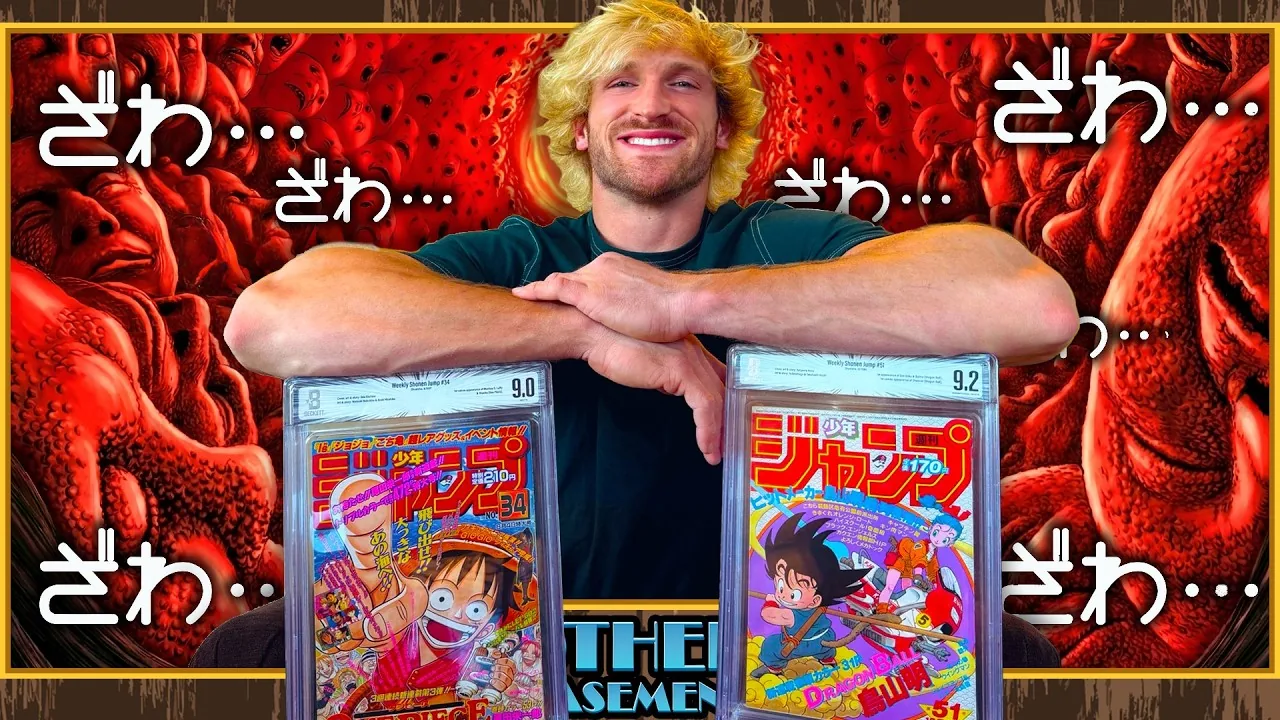
Let's set the scene. Logan Paul sits at roughly 23.6 million subscribers on his main YouTube channel. He's parlayed that into a WWE contract, Prime Hydration (which legitimately prints money alongside KSI), and somehow keeps finding new ways to monetize his audience's trust. His latest venture? Promoting manga grading services—the process of having your Japanese comics professionally authenticated and slabbed in plastic like some kind of weeb Beanie Baby.
Enter Mother's Basement, a channel with about 1.2 million subscribers known for deep-dive anime analysis with a side of spicy takes. Geoff Thew isn't some clout-chasing drama farmer—he's a legitimate voice in the anime/manga space. When he posted his exposé titled simply and devastatingly enough about Logan's manga grading promotion, the Reddit drums started beating immediately. The video racked up 640+ upvotes on r/YouTubedrama within hours, and the comments tell a story of an audience that's simply exhausted.
The core allegation isn't complicated: Logan Paul is using his massive platform to pump up the perceived value of graded manga, a market that operates with the transparency of a back-alley three-card monte game. Sound familiar? It should. This is the exact playbook from the CryptoZoo disaster, where Logan promoted a crypto game that never materialized while investors watched their money evaporate into the blockchain void.
Here's the mechanic, for those lucky enough to have avoided it: grading companies charge you to assess your manga's condition, then encapsulate it in a plastic tomb with a score. Suddenly, a $20 copy of "My Hero Academia" volume one becomes a "9.8 NEAR MINT PLUS INVESTMENT GRADE ASSET" worth... whatever someone will pay for it. And that's the rub. The market is opaque, illiquid, and driven almost entirely by hype from influencers who have financial incentives to pump the numbers.
Logan isn't alone in this space. The manga grading phenomenon has exploded alongside the broader "alternative asset" grift that's swept through creator culture. We've seen it with Pokémon cards (Logan was there too, naturally), with sneaker flipping, with NFTs—the pattern is always the same. Creator with massive audience discovers niche collectible market, creator hypes said market, audience rushes in hoping to flip, early movers cash out, everyone else holds bags of depreciating plastic-encased paper.
What makes Mother's Basement's takedown land differently is his genuine expertise. This isn't a drama channel stirring pot for views—Thew has spent years building credibility in the anime/manga community. When he says the grading market is manipulated and that Logan's promotion crosses ethical lines, it carries weight. The video methodically breaks down how grading creates artificial scarcity, how the "investment" narrative is pushed despite the market being too young and illiquid to support it, and how Logan's involvement is less "passionate collector" and more "opportunistic promoter."
The broader context here is crucial. Logan Paul represents the apex predator of the creator economy—the influencer who has perfected the art of converting audience trust into liquid cash through increasingly dubious vehicles. His brother Jake went the boxing route. KSI (of Sidemen fame, 20+ million subs) went the beverage route with Prime, which at least delivers an actual product. Logan keeps gravitating toward... let's call them "abstract financial instruments."
And the creator economy keeps enabling it. YouTube's algorithm rewards controversy and drama with views. Platforms don't have robust mechanisms to flag potentially misleading financial content when it's wrapped in the language of "collecting" or "investing" rather than explicit financial advice. The line between "hey look at this cool thing" and "buy this thing and you'll make money" is deliberately blurred.
What's particularly galling is the timing. We're in an era where creator accountability is actually being discussed seriously. Hasan Piker faces congressional scrutiny for his political commentary. xQc casually reveals on Kick that Overwatch esports viewership was massively botted—300k claimed viewers versus 14k real ones—exposing the infrastructure of lies underlying the attention economy. Meanwhile, IShowSpeed nearly dies in Barbados for content, and the machine just keeps churning.
The international creator space offers contrast and comparison. In China's Douyin and Kuaishou ecosystems, Wang Hong (网红) culture has its own problems with livestream sales and dubious products—the recent East Buy (东方甄选) drama with Dong Yuhui (董宇辉) showed that even educational selling has its breaking point. But there's something uniquely American about the Logan Paul approach: the shamelessness, the repeated offenses, the knowledge that your audience will forgive you because they've invested their identity in being a Maverick or whatever.
Mother's Basement deserves credit for swinging at someone with 20x his audience. The power dynamics of calling out bigger creators are real—just ask Doothi, who recently spoke about feeling "panic and compliance" when pressured to remove a video that "upset powerful creators" in the commentary space. The commentary community has its own politics, and taking shots at Logan Paul isn't consequence-free.
But here's the thing: none of this matters without consequences. Logan Paul will issue a non-apology if pressed, maybe make a joke about it on his podcast Impaulsive, and move on to the next grift. His audience will remain. The algorithm will continue serving his content. And in six months, we'll be doing this exact dance again with whatever new "asset class" he discovers.
The manga grading market will eventually collapse or correct—it always does. The question is how many young fans will lose money before it does, and whether the creator economy will ever develop actual standards around financial promotion. Based on current trajectory? Don't hold your breath. Or your graded manga. Same difference at this point.