Jacob Geller Just Broke the Internet's Favorite Brain-Dead Talking Point
Every single time some creator gets banned, demonetized, or ratio'd into oblivion, what's the reflex? "LITERAL 1984." It doesn't matter if it's a TikToker getting flagged for dancing in a bikini or some edge-lord streamer catching a ban for saying slurs on Kick — the internet's collective literary education apparently begins and ends with one dystopian novel they last skimmed in 10th grade.
Enter Jacob Geller, the video essayist who just dropped "Why Does Everyone Think '1984' Agrees With Them" on YouTube and promptly gave the entire creator economy a much-needed literacy check.
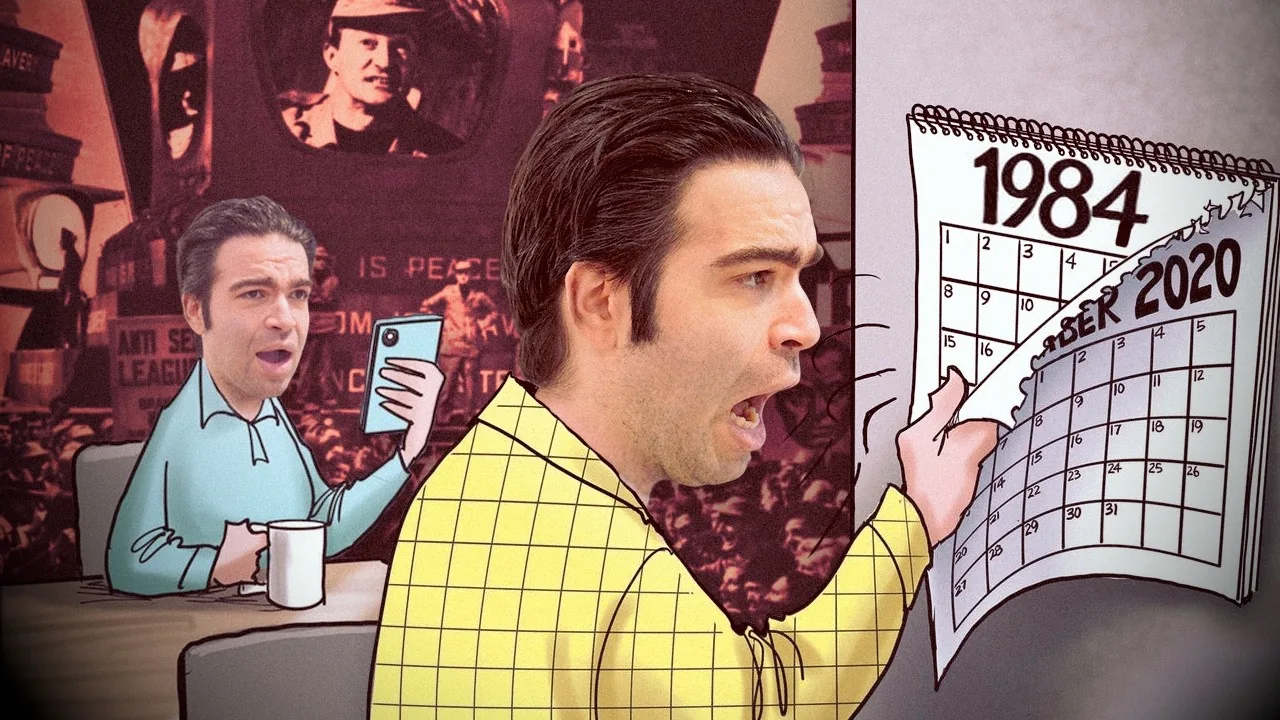
Geller, sitting at roughly 1.2 million subscribers, has built his channel on sprawling, deeply researched video essays about architecture, horror, and how media shapes our understanding of violence. He's not your typical BreadTube rage-baiter. The man actually reads books before having opinions about them — a radical concept in today's creator landscape where hot takes are currency and reading comprehension is a debuff.
The essay, which has been making waves across Reddit's BreadTube community and beyond, dissects something genuinely fascinating: how George Orwell's "1984" became the ultimate rhetorical prop for literally every ideological camp on the internet. Left, right, center, apolitical gamer bros who "just want to grill" — everyone thinks Orwell was secretly on their team. Geller methodically unpacks why that's not just wrong, but hilariously, catastrophically wrong in ways that would make Orwell spin in his grave fast enough to power a small Discord server.
Here's why this matters for the creator economy specifically: we live in an era where literary references are aesthetic accessories, not arguments. When xQc reacts to a news clip and chat spams "1984" because a Twitch mod deleted a questionable emote, that's not political discourse — that's intellectual cosplay. When Kai Cenat's stream gets temporarily suspended and his fans invoke Big Brother, they're not making a point about surveillance states; they're performing a weird cultural ritual they don't understand.
And it's not just the Western sphere. On Douyin and Kuaishou, you've got the FAKE TRUMP impersonators and satirical political lookalikes navigating actual state censorship while their audiences toss around Orwellian comparisons with zero irony. Xiao Yang Ge (疯狂小杨哥) caught massive regulatory heat, Dong Yuhui (董宇辉) navigated the East Buy (东方甄选) corporate drama under intense public scrutiny, and Li Jiaqi (李佳琦), the Lipstick King himself, disappeared after a Tiananmen-referencing ice cream incident. These creators operate in environments where "1984" comparisons aren't just lazy rhetoric — they describe actual systemic control mechanisms. The contrast with Western creators weaponizing the same text to cry about YouTube demonetization is stark enough to give you whiplash.
Geller's video works because it doesn't just mock the "1984" abusers — it traces the intellectual lineage. Orwell wasn't the prophet of American conservative thought. He wasn't a libertarian mascot. He was a democratic socialist who literally fought alongside anarchists in the Spanish Civil War and wrote Homage to Catalonia about being hunted by Stalinists. The man's entire deal was hating totalitarianism from the LEFT, not advocating for unregulated free markets or whatever crypto-bro podcast hosts think he meant.
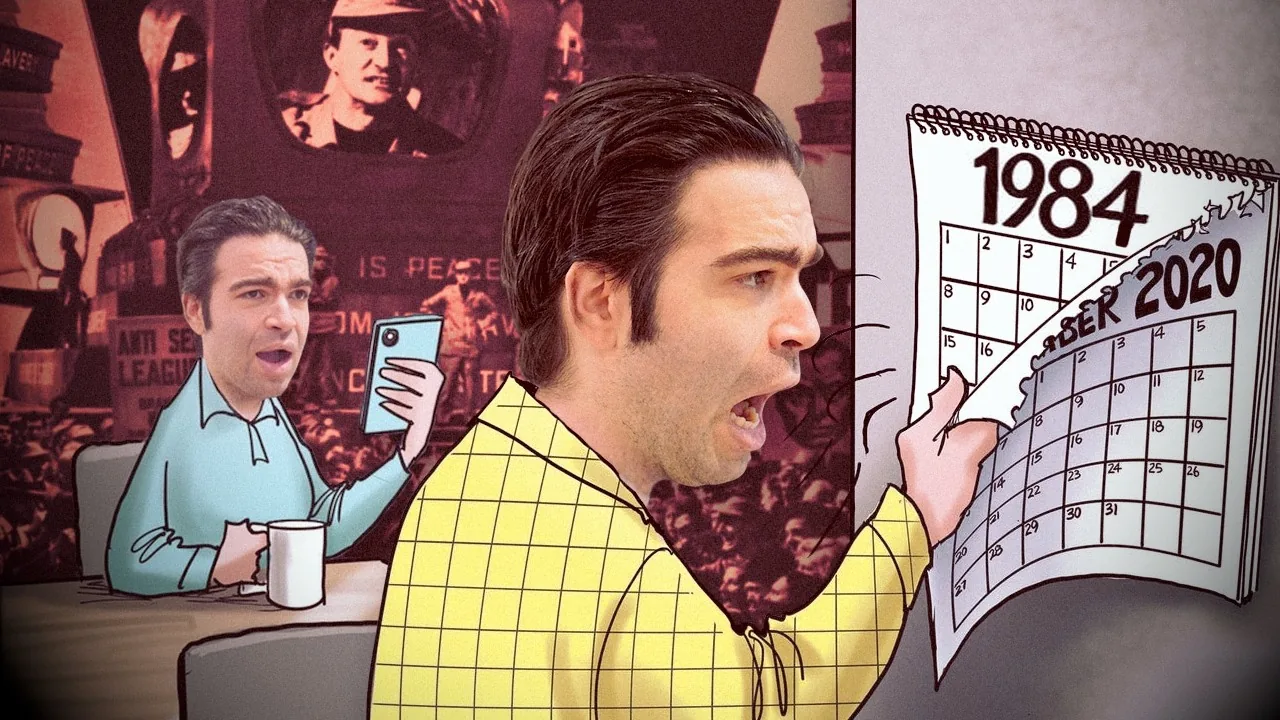
The video essay format itself is worth discussing in creator-economy terms. Geller represents a tier of YouTube intellectualism that's become increasingly viable commercially. Video essayists like him, Folding Ideas (Dan Olson), and hbomberguy have proven there's massive audience appetite for long-form analytical content. We're talking 40+ minute videos pulling millions of views. The ad revenue alone on these videos dwarfs what most mid-tier creators make from sponsorships. Brands like Squarespace, Ridge Wallet, and Skillshare have essentially funded an entire renaissance of educational content because the audiences are engaged, loyal, and actually have disposable income.
But here's the uncomfortable truth Geller's video inadvertently exposes: the creator economy's relationship with intellectual property — in this case, the "property" of literary meaning — is essentially parasitic. Creators strip-mine cultural artifacts for rhetorical ammunition without engaging with the actual substance. It's the same mechanism that turns Jungkook's BTS choreography into TikTok challenge fodder without acknowledging the years of training, or reduces Li Ziqi's (李子柒) pastoral artistry to "aesthetic vibes" content while missing the entire cultural preservation argument.
The Reddit response has been predictable but entertaining. BreadTube is treating Geller's video like the second coming of leftist critical theory. YouTubeDrama, meanwhile, is largely ignoring it because nobody got cancelled and there's no screenshot of a可疑 Discord DM to dissect. The algorithm seems to be giving it decent push — the video's sitting at solid view counts relative to Geller's channel size, though it hasn't broken into the mainstream creator discourse the way, say, some manufactured iShowSpeed controversy would.
And that's the real tragedy here, isn't it? A thoughtful, well-researched 45-minute deconstruction of how we misunderstand the most-misunderstood book in history will get a fraction of the engagement that a 30-second iShowSpeed near-death experience clip generates. The creator economy doesn't reward depth — it rewards dopamine. Geller knows this, and he makes his content anyway. That's either admirable or commercially questionable, depending on your perspective.
What Geller's video ultimately proves is that the creator economy has a literacy problem it doesn't want to admit. We've created an ecosystem where everyone's a critic and nobody's read the source material. Where "do your own research" means watching three TikToks from an account called "BasedPatriot1776." Where the most-referenced dystopian novel in internet history is also the least-understood.
Orwell would have had a field day with us. And Geller, to his credit, is at least trying to make us see it.