Logan Paul's Pokémon Card Millions: Rich Guy Burns Cash On Cardboard
Logan Paul has done a lot of absurd things in his career. He filmed a dead body in Japan's Suicide Forest. He boxed Floyd Mayweather and somehow didn't die. He launched a hydration drink that tastes like melted gummy bears and became a billionaire-adjacent mogul. But nothing — and I mean NOTHING — captures the pure decadent chaos of the modern creator economy quite like this man setting fire to millions of dollars on pieces of cardboard with cartoon monsters on them.
Yes, Pokémon cards. Those things you loved in 1999 and your mom threw away. Logan Paul turned them into performance art.

Let me set the scene for you. Logan Paul — 23 million YouTube subscribers, one half of the most famous brother duo since the Wachowskis, a man whose net worth exists in that hazy stratosphere where "rich" and "stupid rich" blur together — has been systematically buying the most expensive Pokémon cards on Earth. Not casually. Not as a hobby. As a spectacle.
We're talking about dropping $5.275 million on a sealed first-edition booster box. Five. Point. Two. Million. Dollars. For cardboard. That he then opened on camera while tens of thousands of viewers screamed in chat like they were watching the World Cup finals instead of a grown man pulling a piece of glossy paper from a foil wrapper.
The Polygon piece lays it out: Logan has spent millions — plural — building what might be the most expensive Pokémon collection in human history. PSA-graded 10s. Shadowless Charizards. First-edition base sets. The works. He wore a BGS 10 Charizard card around his neck — AROUND HIS NECK, like a diamond chain — during his walkout to fight Mayweather. That card alone was insured for over a million dollars.
This is where we are in the creator economy, folks. Influencers have so much money that they've循环ed past yachts, past Lambos, past private islands, and landed on trading cards from their childhood as the ultimate flex.
Now here's where it gets actually interesting, not just "haha rich guy does rich guy things." Logan Paul's Pokémon obsession has real consequences for the hobby. Real collectors — people who've been carefully curating binders since the Clinton administration — have watched the market go absolutely insane because of him. Prices skyrocketed during the pandemic boom, and Paul became the poster child for the new wave of celebrity buyers treating Pokémon cards like Bitcoin.
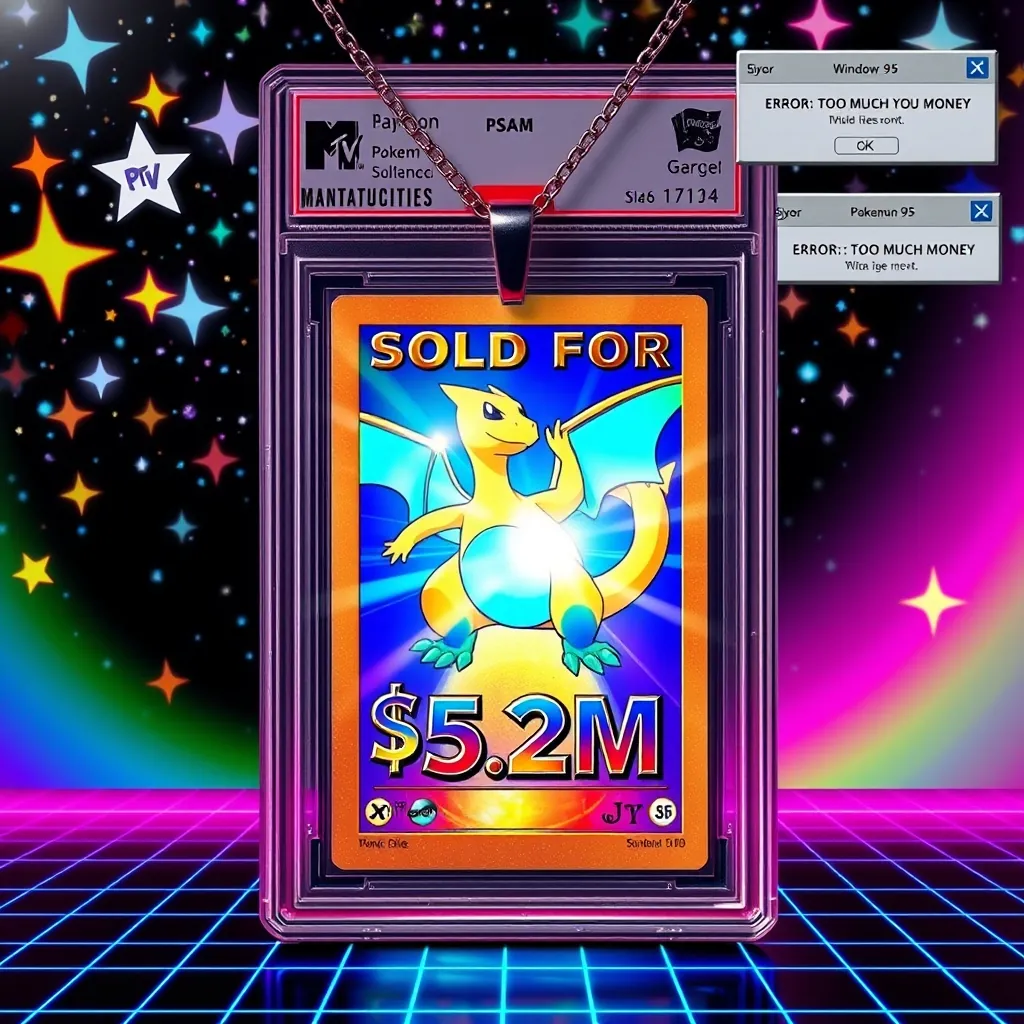
Remember the fake card scandal? Of course you do. In 2021, Logan bought a bunch of cards from a dealer for a reported $3.5 million. When he sent them to PSA for authentication, the grading company said "yeah no" — the cards were counterfeit. Forged. Worthless. Logan reacted with the kind of visible panic you only see when someone realizes they just made the most expensive mistake of their life on camera.
And THAT is the real story here, isn't it? The creator economy has produced a class of young multimillionaires who have astronomical incomes but only a few years of experience being rich. They don't have the Warren Buffett instinct. They have the "I saw this on TikTok and it's going to the moon" instinct. Logan Paul is not unique — he's just the loudest example of a whole generation of creators who turned their brand valuation into speculative assets.
Look across the landscape. You've got MrBeast pouring hundreds of millions into video production and warehouse-sized sets. You've got Adin Ross dropping six figures on gambling streams. You've got Chinese livestreamers like Xiao Yang Ge (疯狂小杨哥) moving billions in product through Kuaishou sales marathons. You've got fake Trump impersonators on Douyin selling who-knows-what to grandmas. The creator economy has always been about converting attention into money — but now we're watching what happens when that money needs somewhere to go.
Logan chose cardboard. Literally.
But here's my opinion, and I'll die on this hill: it's not actually that crazy. Hear me out.
A PSA 10 first-edition Charizard has appreciated faster than most index funds over the past decade. The Pokémon TCG market, while volatile, has real collector demand, real scarcity, and a 25-year cultural track record. When Logan Paul drops $5 million on a booster box, he's not just buying cardboard — he's buying content. That unboxing video probably generated more than $5 million in long-term ad revenue, sponsorship value, and brand equity. He turned an asset purchase into a tax-deductible business expense that also doubled as a viral marketing event.
That's not stupidity. That's predator-level creator economy instinct.
The same instinct that made Dong Yuhui (董宇辉) into East Buy's (东方甄选) golden goose on Douyin. The same instinct that turned Li Jiaqi (李佳琦), the Lipstick King, into a livestream billionaire by selling $1.9 billion in a single 12-hour session. These aren't just influencers — they're attention alchemists who understand that in 2024, the spectacle of spending is itself a revenue generator.
Logan Paul's Pokémon collection will probably hold its value. The rare card market has corrected since the pandemic peak, but top-tier slabs from the base set remain blue-chip collectibles. He's diversified into Prime hydration, Maverick apparel, Impaulsive podcast revenue, and a media empire that generates nine figures annually. The Pokémon cards are a rounding error in his portfolio that happen to make incredible content.
So is he "wasting millions"? Only if you think a YouTube video with 30 million views is a waste. Only if you think generating headlines in Polygon, this very blog, and every culture publication on Earth is a waste. Only if you think cementing your brand as the guy who bought the most expensive Pokémon cards in history — a title that will follow him for decades — is a waste.
Logan Paul isn't burning money. He's converting cash into legend.
And that, more than anything, is what the modern creator economy rewards. Not just talent. Not just luck. But the audacity to do something so outrageous, so viscerally extra, that the internet has no choice but to watch.
Now if you'll excuse me, I need to go check if my old binder has anything worth money. Because clearly, the real millionaires are the ones who never let their moms throw away their Charizards.